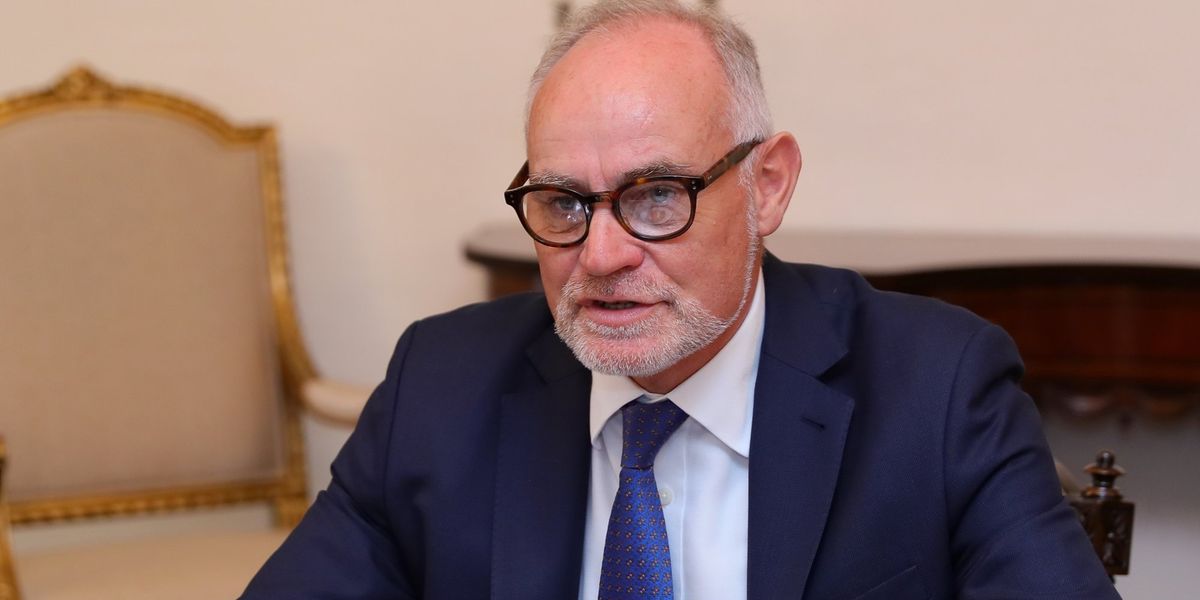
Crispin Blunt: Why This Conservative MP Demanded a New ISIS Strategy
In the complex tapestry of global politics, few voices cut through the noise with the clarity and conviction of Crispin Blunt. This veteran blunt conservative mp, known for his independent streak and analytical approach, made headlines during his tenure as Chair of the Foreign Affairs Select Committee by challenging the prevailing strategy against ISIS. His core message was unequivocal: the world needed more than just bombs to defeat the burgeoning terrorist state; it needed a sophisticated, regionally-driven political and military strategy.
His intervention came at a critical juncture, raising essential questions about the efficacy of Western military action and the imperative for integrated diplomatic solutions. Blunt's insights offer a valuable case study in how a thoughtful parliamentarian can shape the discourse on pressing international security threats.
The Urgency for a New Approach: When ISIS Grew Stronger
The year following the fall of Mosul, Iraq's second-largest city, marked a sobering anniversary. Despite nearly a year of sustained bombing campaigns by a US-led coalition, the Islamic State (ISIS) had not only survived but appeared to be strengthening its hold and expanding its insidious influence. The world watched with growing concern as the group continued its reign of terror, evidenced by tragic developments like a 17-year-old becoming Britain's youngest suicide bomber in Iraq.
It was against this grim backdrop that Crispin Blunt, then the newly appointed Chair of the Foreign Affairs Select Committee, spoke out. He echoed the Prime Minister's assessment of ISIL as "one of the biggest threats the world has faced." However, his agreement on the severity of the threat diverged sharply when it came to the proposed solutions. The current military strategy, primarily relying on airstrikes and drone attacks, was, in Blunt's view, "plainly not going to work." More disturbingly, he warned that it was "potentially having the effect of making them stronger," a counterintuitive but increasingly plausible outcome given the group's resilience and recruitment success.
Crispin Blunt's Critique: Beyond Bombs and Drones
Blunt's tenure as chair of a key parliamentary committee gave significant weight to his observations. He wasn't just another politician; he was at the forefront of scrutinizing Britain's foreign policy. His critique of the anti-ISIS strategy was fundamentally about efficacy and long-term vision. He argued that a purely kinetic approach, focused solely on military strikes, was an insufficient, even dangerous, method for dismantling a complex socio-political entity like ISIS. The problem, as Blunt saw it, wasn't just about destroying a physical presence, but about eradicating an ideology and dismantling a functional proto-state.
For Blunt, the absence of a cohesive "proper political and military strategy to defeat them" was the glaring oversight. He believed that military force, to be truly effective, must be a tool in service of clearly defined political objectives. Without a clear end-state beyond simply degrading ISIS, and a political pathway to achieve it, military actions risked becoming aimless and counterproductive, potentially fueling grievances and inadvertently aiding the group's narrative of resistance.
Practical Tip: When addressing complex global threats, a multi-faceted approach combining diplomatic, economic, informational, and military tools (often referred to as DIME) is generally more effective than relying on a single instrument.
A Regional Solution: Diplomacy as the Foundation
The cornerstone of Crispin Blunt's proposed new strategy was a radical call for enhanced regional cooperation. He highlighted the critical need for "intelligent co-operation between the regional powers" – specifically naming Turkey, Saudi Arabia, Iran, and possibly Egypt. This was a bold proposition, given the deep-seated historical rivalries and proxy conflicts that often characterized relations between these nations.
Blunt acknowledged these inherent tensions, recognizing that these states "all have different interests." Yet, he stressed the unifying factor: "we all have an overriding interest in the defeat of Islamic State." This shared threat, he argued, should compel them to overcome their differences and forge a common political strategy. Such a strategy, once agreed upon, could then be "underpinned with the necessary military means" to achieve the ultimate objective: "the defeat of Islamic State and the occupation and administration of the lands they currently have under control."
His vision was holistic. It involved not only defeating ISIS militarily but also addressing the post-conflict realities in Syria, Iraq, and Kurdistan. He envisioned the P5 powers – Russia, China, the United States, the UK, and the rest of the European Union – playing a crucial supporting role, providing the necessary military capabilities to regional states once a political framework was firmly established. The critical sequence, as he repeatedly emphasized, was to "first of all we have got to sort out the political objective and the political strategy" before unleashing full military force.
Insight: The challenge of bringing together regional rivals like Saudi Arabia and Iran to cooperate against a common enemy underscores the immense diplomatic heavy lifting required for effective international security. It demands patient negotiation, trust-building, and a clear articulation of shared existential threats.
The Legacy of a Principled MP: Crispin Blunt's Broader Impact
Crispin Blunt's forthright approach to international affairs was characteristic of his long and distinguished parliamentary career. Serving as the blunt conservative mp who fought for reselection for Reigate from 1997 to 2024, Blunt was more than just a party loyalist. He demonstrated an impressive capacity for independent thought and moral courage throughout his time in the House of Commons.
His political journey included a significant role as Parliamentary Under-Secretary of State for Prisons and Youth Justice within the Ministry of Justice from 2010 to 2012. However, it was perhaps his personal courage that most defined his public image. In 2013, he faced deselection by his Constituency Conservative Association Executive Council, with widespread speculation that this decision was linked to his public announcement that he was gay. Yet, in a testament to his strong local support and principled stand, the decision was overwhelmingly overturned by party members in Reigate by a remarkable 5-1 margin. This episode solidified his reputation as an individual willing to stand firm on his convictions, both personal and political.
His call for a comprehensive ISIS strategy was not an isolated incident but rather indicative of his broader commitment to rigorous analysis and effective governance. He embodied the role of a parliamentarian who prioritizes critical thinking over political expediency, even when challenging the status quo within his own party or government.
Beyond the Interview: The Enduring Relevance of Blunt's Insights
Crispin Blunt's prescient observations on the need for a recalibrated ISIS strategy remain strikingly relevant today. The complexities of combating non-state actors, religious extremism, and proxy conflicts continue to challenge international security. His insistence on prioritizing political strategy and fostering regional cooperation offers vital lessons for addressing similar threats globally.
His approach highlights several enduring principles:
- The Limits of Military Force: Military action, while sometimes necessary, is rarely a standalone solution for deep-seated political or ideological conflicts.
- The Power of Diplomacy: Even amidst profound rivalries, shared threats can create openings for unprecedented diplomatic efforts.
- Holistic Problem Solving: Effective strategies must consider not just immediate threats but also underlying causes, regional dynamics, and post-conflict stabilization.
- Principled Leadership: The importance of leaders, like the blunt conservative mp, who are willing to voice uncomfortable truths and advocate for long-term, strategic solutions over short-term fixes.
To delve deeper into his broader vision for UK foreign policy and his approach to complex international challenges, you might find more insights in Blunt MP on ISIS: Inside Crispin Blunt's Foreign Policy Vision.
Crispin Blunt's demand for a new ISIS strategy wasn't just a critique; it was a blueprint for a more effective, nuanced approach to one of the most significant security threats of our time. His legacy as a blunt conservative mp who consistently advocated for intellectual rigor and moral courage serves as a powerful reminder of the impact that thoughtful parliamentary leadership can have on shaping national and international responses to complex challenges.