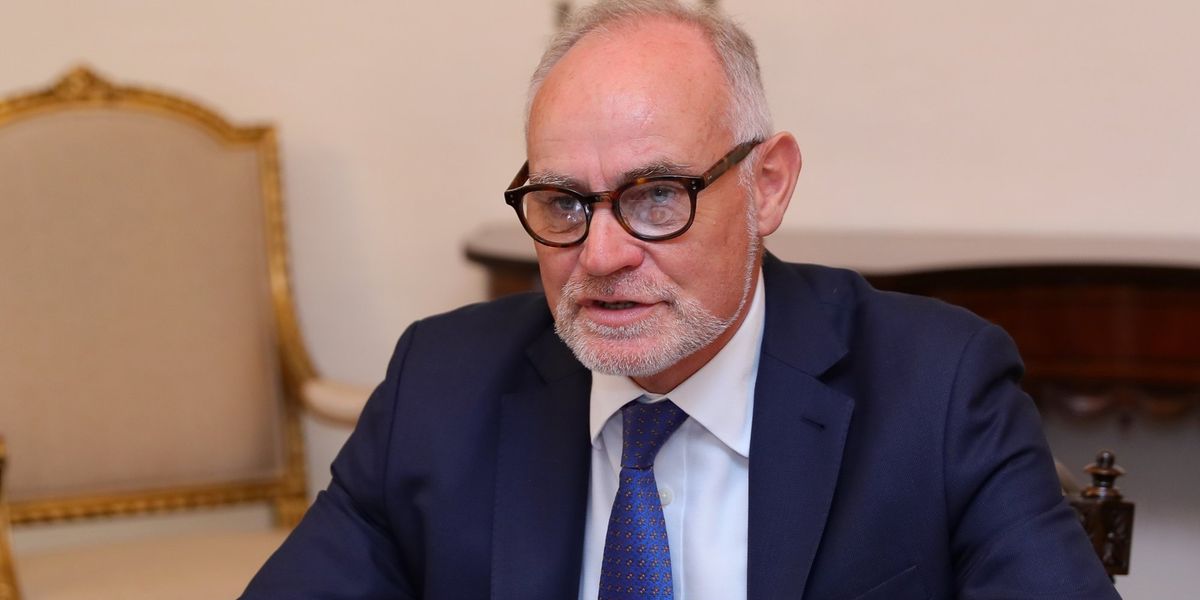
Crispin Blunt's Vision: A Blunt Conservative MP Challenges ISIS Strategy
Crispin Blunt, a name synonymous with incisive analysis and a willingness to challenge conventional wisdom, stands as a distinctive figure among British politicians. As a former blunt Conservative MP for Reigate from 1997 to 2024, Blunt earned a reputation for his forthright — indeed, often blunt — assessments, particularly in the realm of foreign policy. His tenure as Chair of the influential Foreign Affairs Select Committee from 2015 to 2017 provided him a powerful platform to articulate a nuanced, and at times controversial, approach to some of the world's most pressing security challenges, not least the rise of Islamic State (ISIS).
While many political figures echoed government lines, Blunt consistently advocated for a deeper, more strategic approach, moving beyond immediate military responses to address the root causes and complex geopolitical dynamics at play. His vision for tackling ISIS was a prime example of this analytical rigor, arguing that a purely military solution, particularly one relying heavily on air power, was not only insufficient but potentially counterproductive. This article delves into Crispin Blunt's comprehensive foreign policy vision, exploring his critical perspective on ISIS and his proposals for a more effective, politically driven strategy.
A 'Blunt' Assessment of the ISIS Threat and Flawed Responses
In the wake of ISIS's ascendance and the fall of Mosul, a turning point that thrust the group into international prominence, the global community grappled with how to respond. Crispin Blunt, then freshly appointed as Chair of the Foreign Affairs Select Committee, unequivocally agreed with Prime Minister David Cameron's assessment that ISIS represented "one of the biggest threats the world has faced." However, his agreement on the severity of the threat diverged sharply when it came to the proposed and implemented solutions. As a veteran blunt Conservative MP, Blunt was not afraid to voice his skepticism.
Blunt observed that despite months of bombing attacks by a US-led coalition, including drones, ISIS had not only survived but appeared to be growing stronger. He openly questioned the efficacy of a strategy limited predominantly to air strikes, suggesting it was "plainly not going to work" and could even exacerbate the problem. His concern was rooted in a fundamental understanding of asymmetrical warfare and the intricate socio-political landscape of the Middle East. Simply dropping bombs, in his view, failed to address the underlying political vacuums, sectarian grievances, and regional power struggles that allowed ISIS to flourish. Blunt's early and pointed criticism underscored his conviction that a truly effective strategy required a profound shift in thinking.
His early intervention set the tone for his committee's work: a rigorous examination of the actual impact of Western military intervention, rather than a rubber-stamping of government policy. This critical lens was a hallmark of his public service, reflecting a politician more interested in effective outcomes than political conformity. For a nation grappling with a formidable new enemy, Blunt's willingness to articulate these difficult truths was invaluable, even if it meant challenging powerful allies and established diplomatic approaches.
Beyond Bombs: The Call for a Comprehensive Political-Military Strategy
Crispin Blunt's foreign policy vision for tackling ISIS was not merely a critique; it was a proactive call for a new, multifaceted approach. He argued forcefully for the development of a "proper political and military strategy" to defeat the group. Central to this vision was the necessity of intelligence cooperation and strategic alignment among key regional powers. He explicitly named Turkey, Saudi Arabia, Iran, and potentially Egypt as indispensable actors, whose collective engagement was crucial for any sustainable solution. This was a particularly challenging proposition, given the deep-seated rivalries and historical animosities among these nations, yet Blunt saw it as the only viable path forward.
His reasoning was clear: the conflict was fundamentally regional, and external powers alone could not impose a lasting peace or defeat an ideology that drew strength from local conditions. The role of the international coalition, led by P5 powers like the United States, Russia, China, the UK, and the broader European Union, was not to dictate, but to facilitate and provide the "necessary military capability" once a political strategy was firmly in place. This sequence – political strategy first, military means second – was a cornerstone of his argument, reflecting a pragmatic understanding that military force is a tool to achieve political ends, not an end in itself.
Practical steps derived from Blunt's perspective would include:
- Facilitating Dialogue: Actively promoting and mediating talks between historically adversarial regional powers.
- Shared Intelligence Platforms: Establishing secure channels for intelligence sharing that overcome trust barriers.
- Joint Operational Planning: Developing coordinated military and counter-terrorism operations that leverage regional strengths.
- Diplomatic Pressure & Incentives: Using international diplomatic leverage and offering incentives to encourage regional cooperation.
Defining Victory: Crispin Blunt's Framework for Defeating ISIS
For Crispin Blunt, any military intervention had to be underpinned by an absolutely clear political objective. In the context of ISIS, he stated unequivocally that the objective could be "nothing short of the defeat of Islamic State and the occupation and administration of the lands they currently have under control." This was a powerful and explicit declaration, emphasizing that a mere degradation or containment of ISIS was insufficient. It demanded a comprehensive plan for post-conflict stabilization and governance, acknowledging that military victory without political follow-through often leads to renewed instability.
Furthermore, Blunt recognized that the defeat of ISIS was inextricably linked to resolving the broader, festering conflicts in the region. He highlighted the need to "sort out the issues around what is happening in Syria, what is happening in Iraq, Kurdistan and the rest." These interconnected conflicts, with their myriad actors and competing interests, provided the fertile ground for groups like ISIS to emerge. His framework thus called for a holistic approach that addressed not just the symptoms (ISIS) but the underlying diseases (political instability, sectarianism, governance vacuums).
This comprehensive view implied several crucial elements:
- Clear Post-Conflict Planning: Prioritizing the establishment of legitimate governance, security, and humanitarian aid in liberated territories.
- Addressing Root Causes: Working towards political settlements in Syria and Iraq that offer inclusive representation and reduce sectarian tensions.
- Managing Regional Interests: Mediating between the divergent interests of regional powers regarding the future of areas like Kurdistan and northern Syria.
- Long-Term Commitment: Recognizing that the "defeat" of ISIS is a multi-generational project requiring sustained international and regional engagement.
The Broader Implications of a Maverick Stance
Crispin Blunt's detailed, analytical approach to foreign policy, especially regarding ISIS, cemented his reputation as a thoughtful and independent voice within the Conservative Party. His willingness to speak truth to power, even when it meant critiquing the strategy of his own government or international allies, was a defining characteristic. This independent spirit was evident throughout his career, exemplified by his widely publicised fight for reselection in 2013, an incident that underscored his resilience and commitment to his principles despite internal party challenges.
As a blunt Conservative MP and Chair of a powerful parliamentary committee, Blunt demonstrated the vital role of parliamentary oversight in scrutinizing foreign policy. His questioning forced government ministers and strategists to justify their positions and consider alternative approaches. His insights offered a valuable counter-narrative, reminding policy-makers that military might alone cannot solve complex geopolitical problems.
His contributions transcended partisan politics, offering a framework for understanding and addressing international security threats that remains relevant today. The challenges posed by non-state actors, the complexities of regional conflicts, and the delicate balance between military intervention and political solutions continue to dominate foreign policy debates. Blunt's emphasis on comprehensive strategies, regional ownership, and clear political objectives serves as a enduring lesson for effective international engagement.
Conclusion
Crispin Blunt's foreign policy vision regarding ISIS was a masterclass in strategic thinking. Far from advocating isolationism, the blunt Conservative MP championed a robust, internationally cooperative approach, but one that was fundamentally reoriented. His critique of an overly militarized response, his insistence on regional cooperation, and his demand for clear political objectives underscored a belief that lasting solutions in the Middle East could only emerge from within the region, supported by, but not dictated by, external powers. His insights continue to resonate, offering valuable lessons on the intricate interplay of politics, diplomacy, and military force in tackling the most formidable challenges to global security.